DESIGN SPRINT
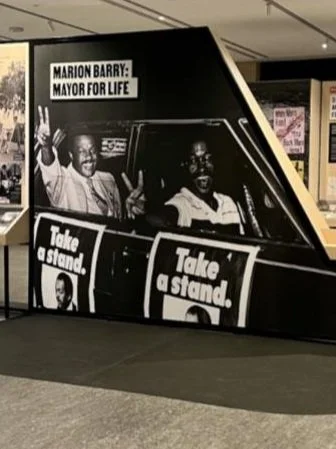
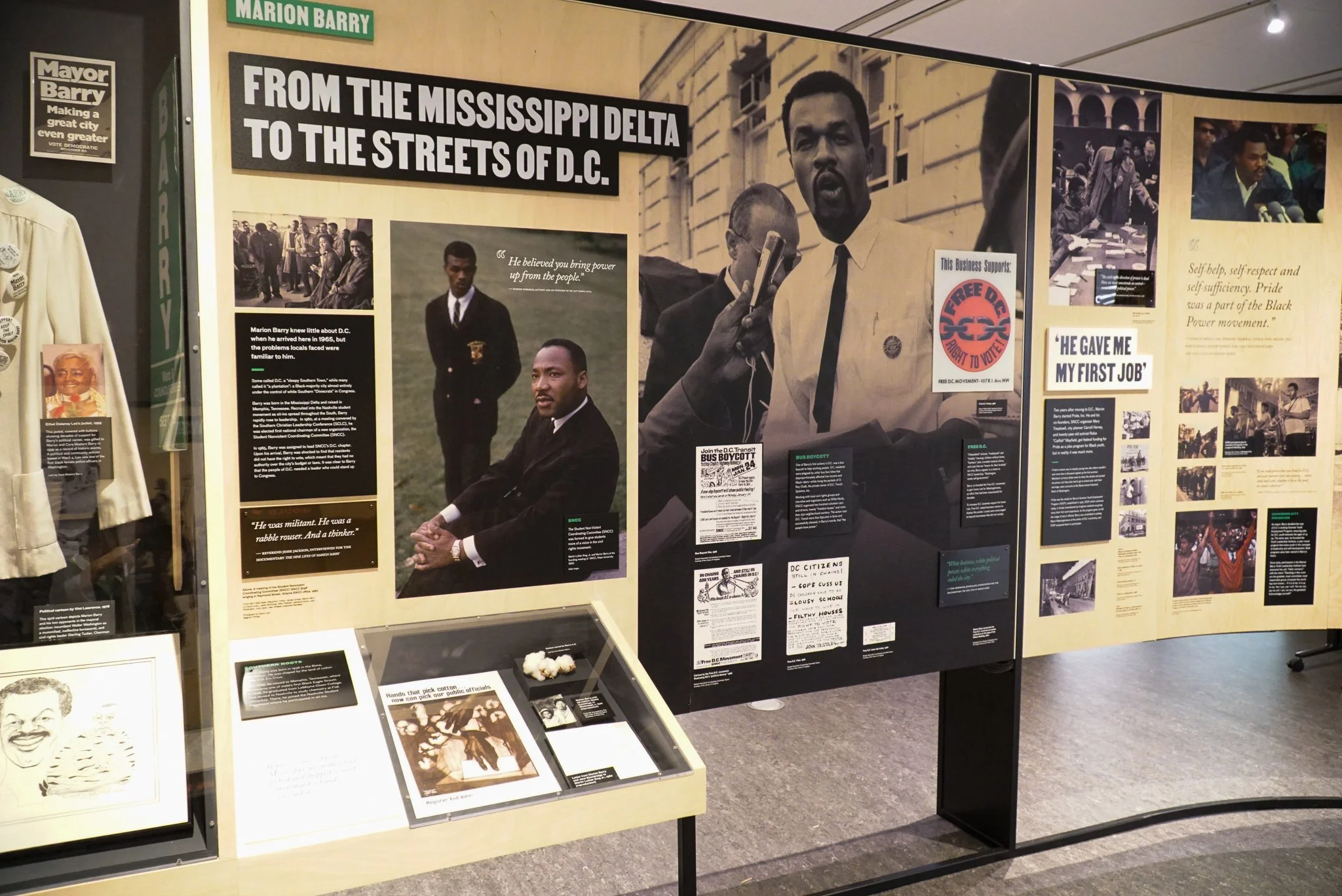
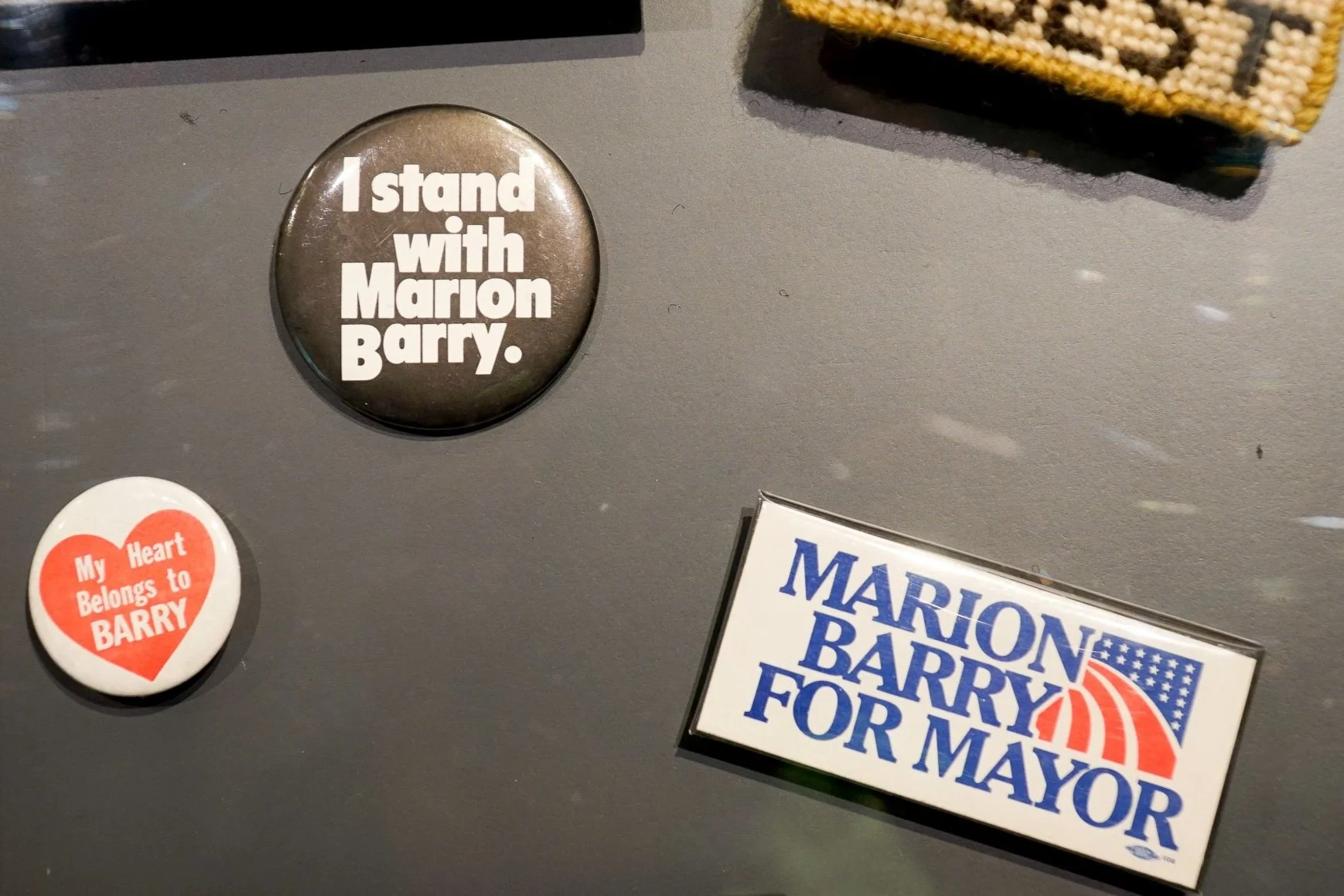
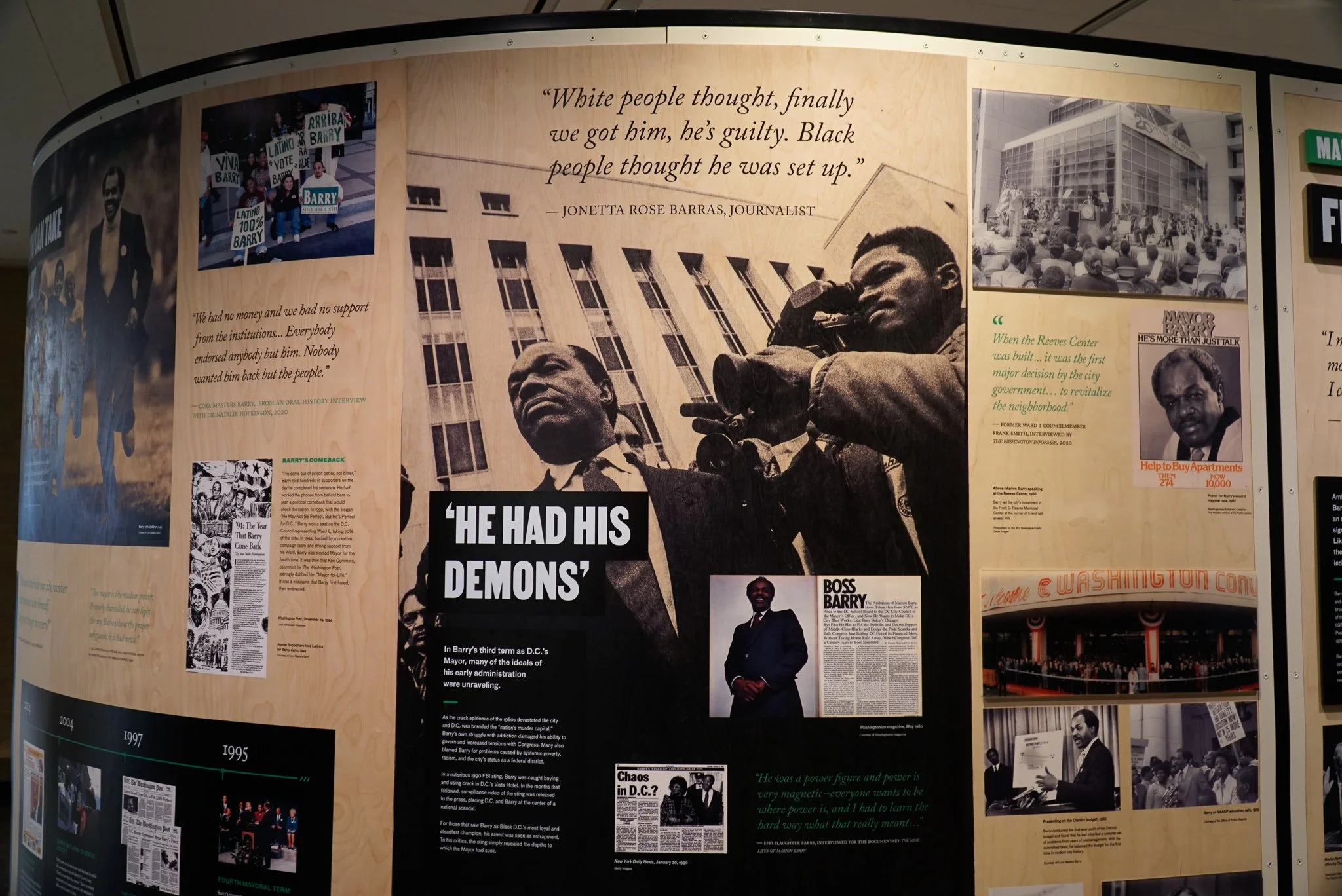
I conducted a research sprint to inform the update of the Marion Barry exhibit located at the Martin Luther King Jr. Memorial Library in Washington DC.
Live Prototyping and Synthesis
Date:
Deliverable:
2023
Design Research; Prototyping, Qualitative Research, Synthesis
Roles:
Client:
Martin Luther King Jr. Memorial Library
Community Engagement, Story Telling, Qualitative Research
Concepts:

PROBLEM
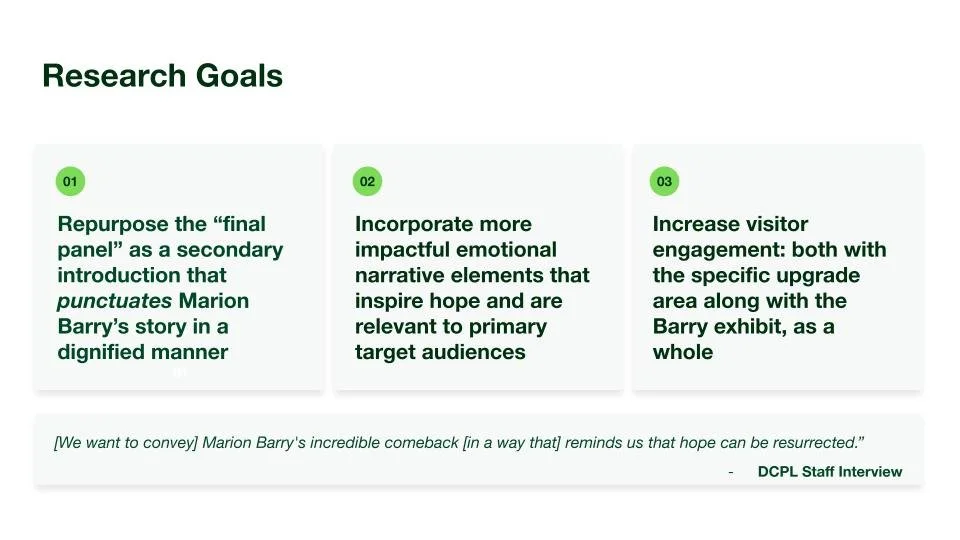
We were asked to help the DC Public Library and their design team by recommending how best they update and refresh their exhibit on DC legend, Marion Barry.
Because this engagement was a research sprint our primary constraint was time. We needed to compress our typical design methodology into a truncated framework comprised of two “mini-spits.” The first block of time was dedicated to discovery, alignment and research planning while the second half of the project was live prototyping, qualitative research and synthesis.
KEY TAKEAWAYS:
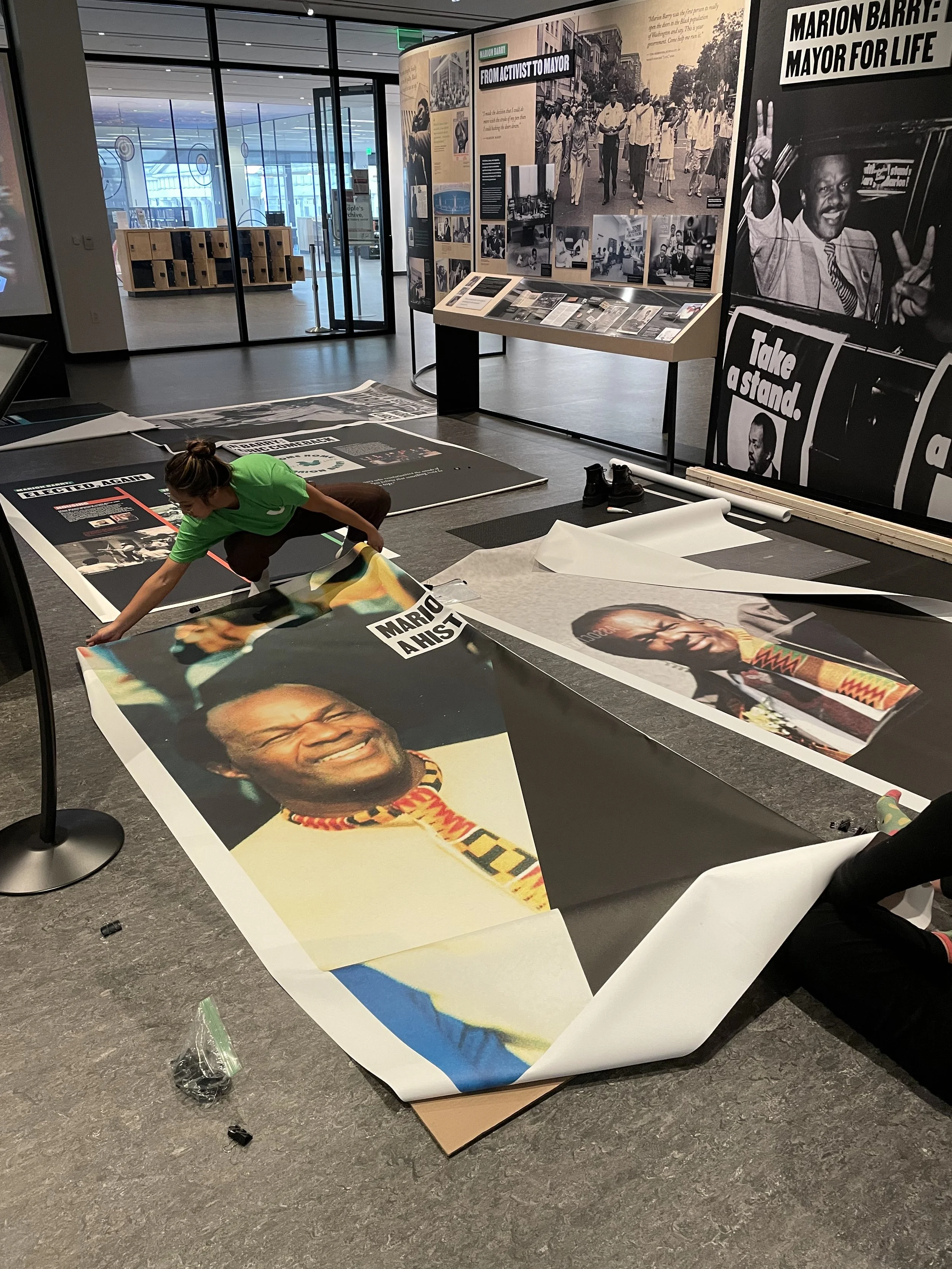
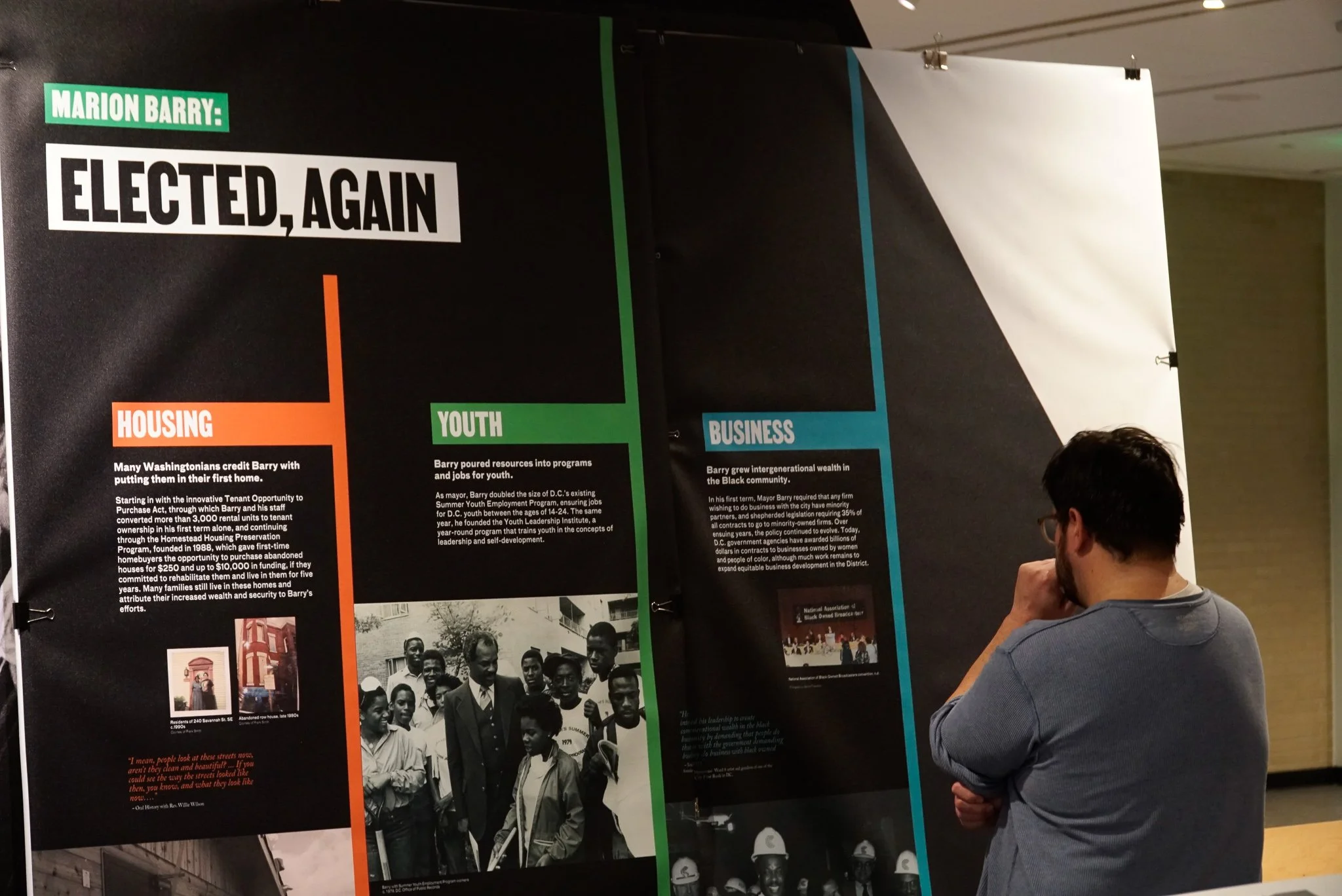
I had the opportunity to develop and conduct a round of live prototyping at the Martin Luther King Jr. Memorial Library in Washington, D.C. nearly 3 years after it opened, in order to further refine the narrative of Marion Barry’s legacy in the local history exhibit.
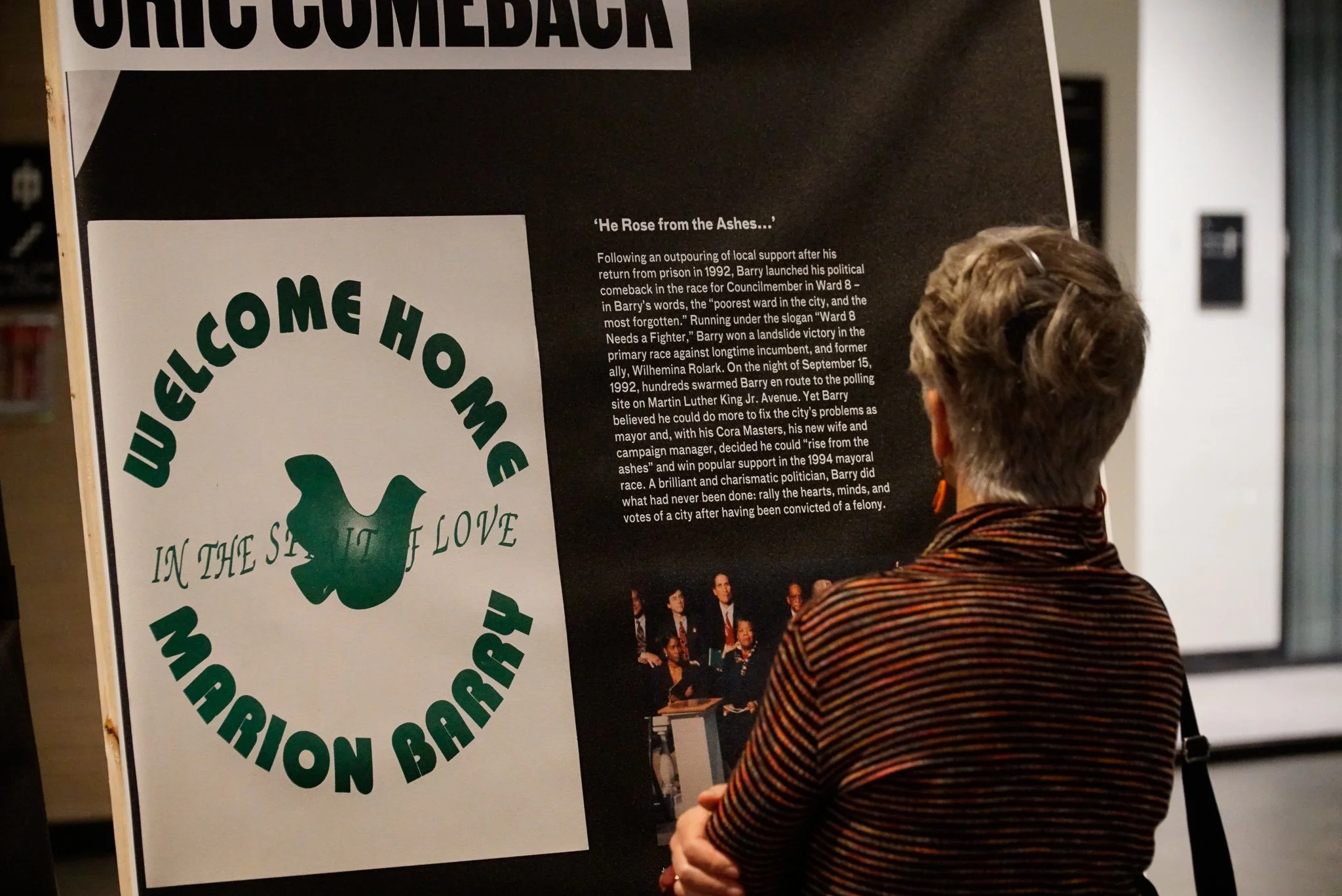
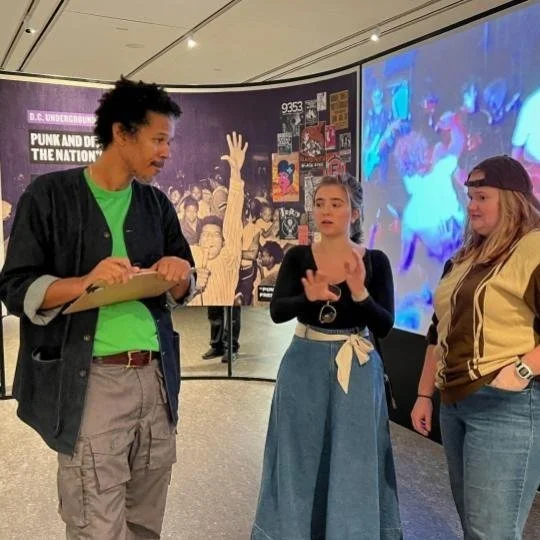
Our team of three installed two concepts and spoke with visitors about the type of content, imagery, design features and interactive elements. Our goal was to gather insight on how they communicated the period of time recognized as Barry’s “comeback.”
Our research confirmed Barry’s lasting legacy in DC, and provided much needed nuance and texture to how he is remembered by both lifelong residents and newcomers.
SOLUTION:
During phase one, we collaborated with the library team to develop consensus around our objectives and then we created a detailed research plan to guide our live prototyping and testing.
Phase two culminated over three days on site at the library in Washington DC. Our team presented two different prototypes to library guests and spoke with attendees about their perceived narratives, imagery, content and design characteristics. In total we conducted over 40 intercept interviews with a diverse range of community members, including long-time DC residents, recent transplants, tourists, youth, and young adults. We also met with members of the Barry Exhibit Advisory Committee and a handful of library staff.
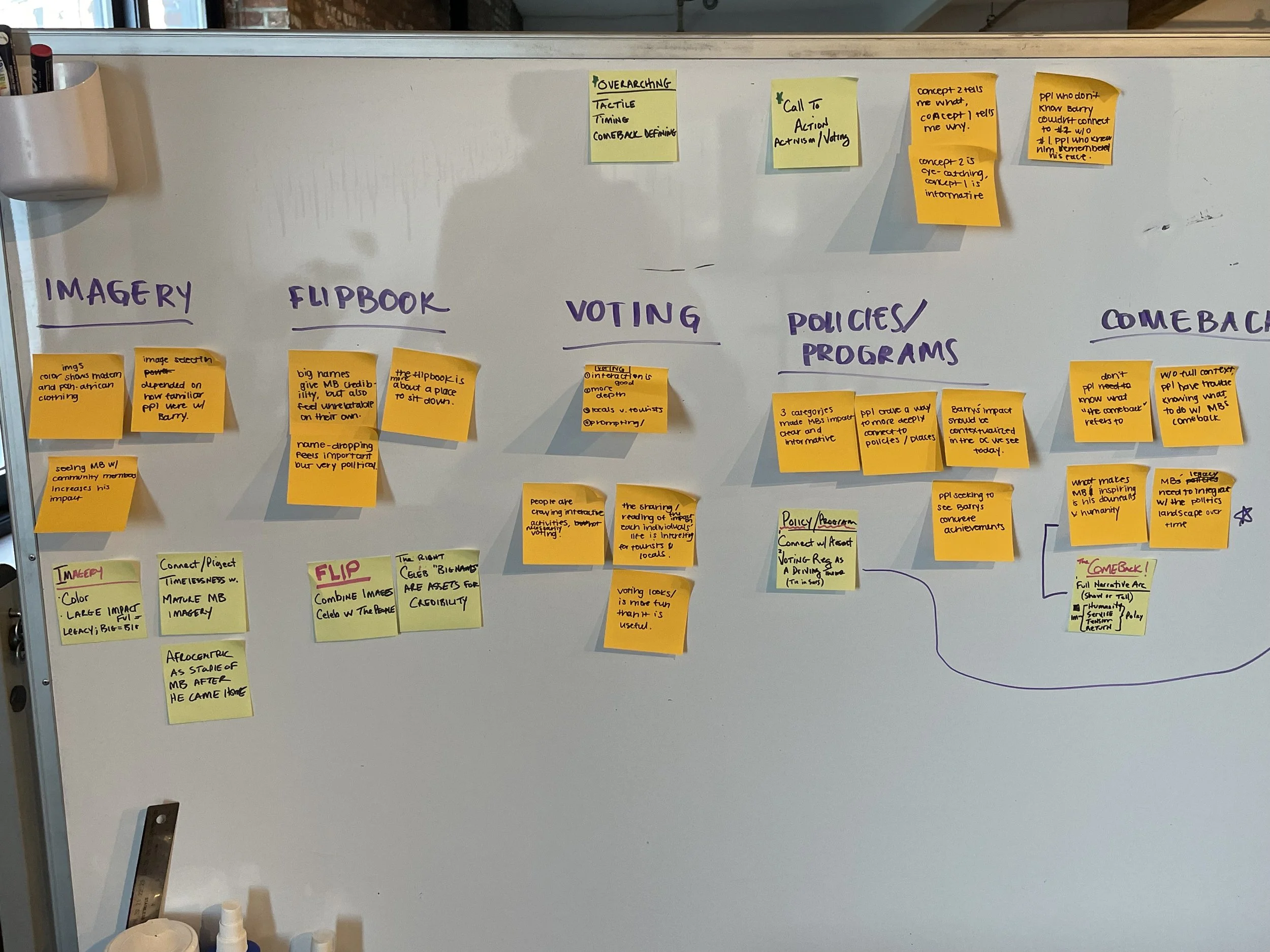
Synthesis of our qualitative research findings were compiled and informed a series of recommendations about the narrative goals (“the comeback”), the imagery, the policies and programs of the Barry administration, and feedback on some of the design choices and features of the prototypes.